

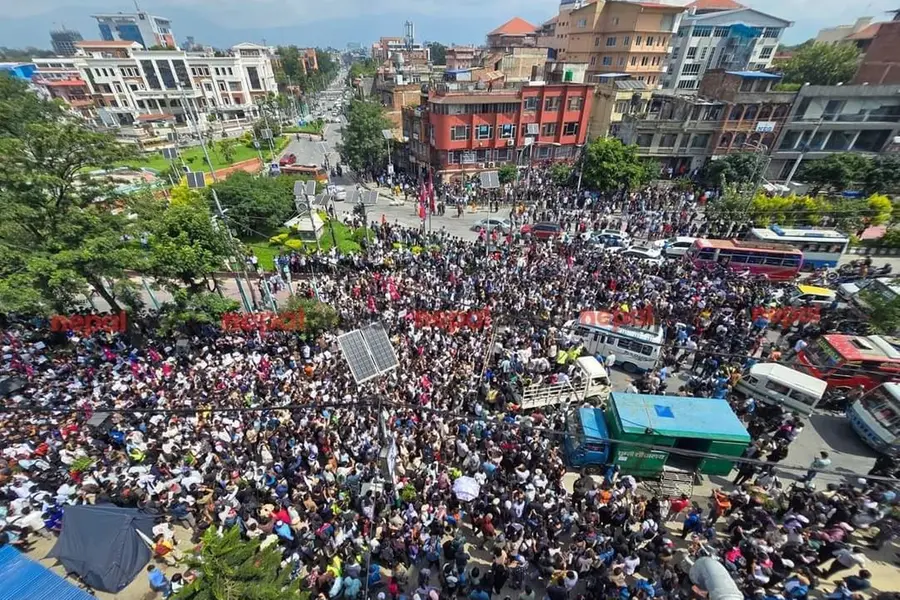
Kathmandu, September 10 – A new revolution has erupted in Nepal as Generation Z launched a historic protest that has already claimed the lives of more than 72 people. Years of political instability and the ongoing culture of dirty politics have directly affected the daily lives of citizens. Nepali people continue to suffer from unemployment, economic decline, mass outmigration in search of better opportunities, poor mobilization of resources, widespread corruption, and the misuse of power.
Frustrated by these problems, people turned against the very politicians they had elected to represent them in Parliament. Instead of addressing the public’s concerns, leaders were frequently seen engaged in unnecessary disputes with opposition parties. The government was accused of taking the public for granted, particularly under the former Prime Minister, who lost credibility by making threatening statements against citizens. He became one of the most unpopular prime ministers in Nepal’s history, frequently accused of pushing propaganda and disregarding public sentiment.
The crisis intensified when the government announced a ban on social media platforms such as Facebook, Instagram, and WhatsApp, claiming they needed to be registered and regulated. Many believed the true reason behind the ban was to silence criticism directed at the government.
The move triggered global backlash, but the government remained silent. Soon after, Nepalis turned to TikTok to voice their anger, eventually calling for peaceful protests against the social media ban and corruption. What began as a youth-led movement quickly spread across generations, with people from all walks of life expressing solidarity.
On the day of the protest, thousands gathered in Maitighar and Baneshwor. The massive turnout of Gen-Z demonstrators took many by surprise. As the crowd swelled in the afternoon, police resorted to firing tear gas and even live bullets to disperse protesters. The crackdown was brutal—19 students were killed and hundreds were injured, many of whom were rushed to hospitals. Images of police brutality shocked the world, and Nepal’s Home Minister and Prime Minister faced widespread condemnation.
By the next day, curfews were imposed in multiple cities as the situation escalated. Public outrage turned into full-blown resistance—angry crowds attacked the residences of ministers and the Prime Minister, set police stations ablaze across the country, and destroyed government offices, including Singha Durbar and the Parliament building.
By 3 p.m. that afternoon, the government had collapsed under the pressure of the uprising. The protesters declared victory, marking a historic turning point in Nepal’s political landscape.